

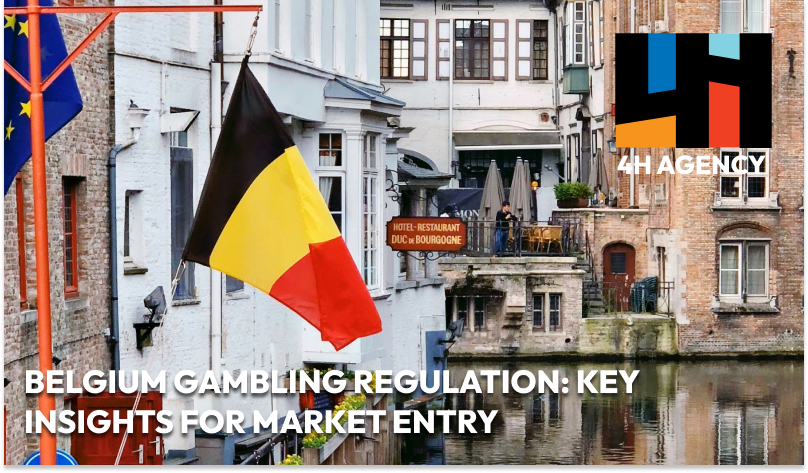
The Belgium gambling regulation is among the strictest in Europe, balancing consumer protection with a highly limited licensing regime. While the market is structured and transparent, barriers to entry remain high due to tight quotas and the strong link between land-based and online rights.
Key Insights
All gambling activities in Belgium are overseen by the Belgian Gaming Commission (BGC). Online licences are tied directly to land-based rights, meaning new approvals are rare. As of today, only nine land-based casino licences exist, and all have already been allocated.
The Belgium gambling licence requirements distinguish several verticals: Class A+ for online casinos, B+ for online slots, and F1+ for online sports betting. However, with national caps already reached, most operators can only access the market via partnerships, acquisitions, or purchasing existing rights.
Taxation depends on vertical and region. Online operators face an 11% GGR tax, while land-based casinos contribute up to 44% of daily net cash proceeds above certain thresholds. Slot machines and sports betting carry varying rates, ranging from 15% to 50% of GGR depending on jurisdiction.
Strict Belgian gambling compliance measures apply across AML, responsible gambling, and advertising. Operators must enforce player ID verification, deposit and loss limits, and offer self-exclusion systems. Since 2023, Belgium has implemented one of Europe’s toughest ad restrictions, with a near-total ban across TV, radio, online platforms, and sponsorships.
These structural constraints create challenges for new entrants, but also ensure stability and consumer trust in the regulated market. For operators prepared to navigate the licensing barriers and compliance requirements, Belgium offers a well-regulatedand long-term opportunity.
The Belgium gambling licence requirements distinguish several verticals: Class A+ for online casinos, B+ for online slots, and F1+ for online sports betting. However, with national caps already reached, most operators can only access the market via partnerships, acquisitions, or purchasing existing rights.
Taxation depends on vertical and region. Online operators face an 11% GGR tax, while land-based casinos contribute up to 44% of daily net cash proceeds above certain thresholds. Slot machines and sports betting carry varying rates, ranging from 15% to 50% of GGR depending on jurisdiction.
Strict Belgian gambling compliance measures apply across AML, responsible gambling, and advertising. Operators must enforce player ID verification, deposit and loss limits, and offer self-exclusion systems. Since 2023, Belgium has implemented one of Europe’s toughest ad restrictions, with a near-total ban across TV, radio, online platforms, and sponsorships.
These structural constraints create challenges for new entrants, but also ensure stability and consumer trust in the regulated market. For operators prepared to navigate the licensing barriers and compliance requirements, Belgium offers a well-regulatedand long-term opportunity.
Want to explore more?
Read the full report from 4H Agency on Belgium gambling regulation here: G3 Magazine
